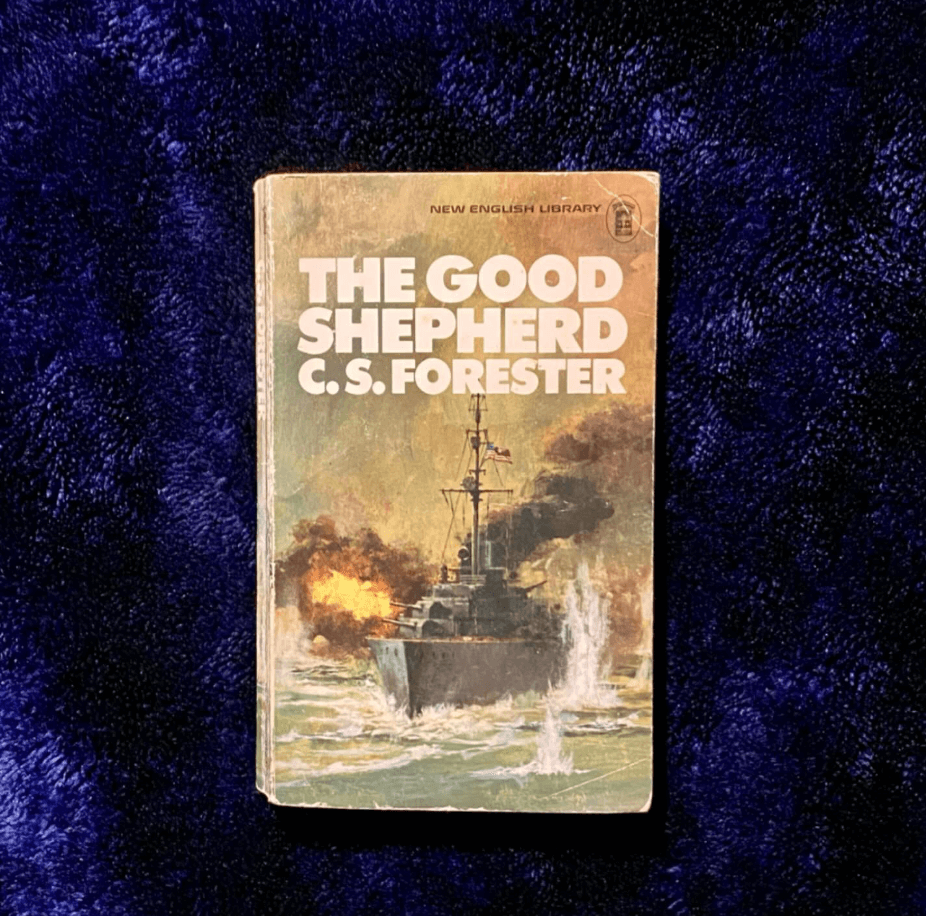
Superbly written with relentless tension and deep character development, this World War II nail-biting thriller is an excellent read.
The author focuses entirely on what the main character, Captain Krause, sees and feels and remembers. In doing so, the author turns what could’ve been a superficial action story into a deeply sympathetic experience.
Krause is leading an escort of 37 cargo ships as they head from the United States to Britain during the Battle of the Atlantic where German U-Boats were a constant danger. This is his first time doing so. He has never before seen combat, and now he must bring all his experience and knowledge and character to bear to protect the helpless cargo ships as well as his own escort vessels.
We see into his mind and understand how he makes life and death decisions coldly and quickly without a moment’s rest, often going many hours between meals. We feel his mental strain and physical fatigue as he resolutely carries out his duty.
But the author goes deeper. Krause is a deeply devout man whose thorough knowledge of the Bible comes up to him constantly during his arduous duty. Memorized verses find new applications in unexpected moments. Instead of distracting him, the verses seem to counsel him, reminding him of his Lord even while having to make terrible decisions for the greater good of the convoy. But he is also a wounded man - in vulnerable moments, he is reminded of his failed marriage and grieves both his anger and his wife’s infidelity.
The action sequences, which comprise most of the book, are almost unbearably tense. For page after page, you are locked in with Krause as he plays a deadly game of cat and mouse with multiple U-boats. If this book is even close to what the escort ships experienced, then I have the utmost respect for what they went through to try and keep those cargo ships safe.
5 / 5 stars
(This book was the inspiration for the Tom Hanks movie “Greyhound”)
These are some of my favorite quotes from the book:
“Weeping may endure for a night, but joy cometh in the morning. It was not true. The heavens declare the glory of God. These heavens? As Krause noted the coming of the light the well-remembered verses came up into his mind – they had come up in his mind in the old days of Pacific and Caribbean sunrises. Now he thought of them with a bitter, sardonic revulsion of mind. The shattered convoy on the flank; the frozen corpses on the liferafts; the pitiless gray sky; the certainty that this agony was going to endure until he could bear it no longer – it was more than he could bear already. He wanted to throw in his hand, to cast aside all thought of his duty, his duty to God. Then he drew himself back from the temptation.
“One more attempt to destroy the hidden enemy. And not one more only; dozens, hundreds, if necessary. While Keeling moved in to the attack, while the talker repeated the ranges, there was time to bow his head. Cleanse Thou me from secret faults.”
“For that one second in that bleak and cheerless pilot-house he had felt the hot Californian sunshine, and heard the barkers and the calliope, and smelt the cattle, and tasted the spun sugar - and known the utter confidence of the child with a loving parent on either side of him. Now he was alone, with decisions to make.”
“There had once been a kind and understanding father. Krause was fortunate in that memory; that father had been able to smile at the excusable naughtiness of a little boy even though he led the life of a saint himself. Krause was not harassed by the thought of sin at having forgotten to say this thanks until his meal was nearly completed. That would be understood and forgiven him. The letter killeth but the spirit giveth life. Krause’s severest and most unrelenting judge, of whom he went in fear, was Krause himself, but that judge had luckily never taken ritual sin under his jurisdiction.”